
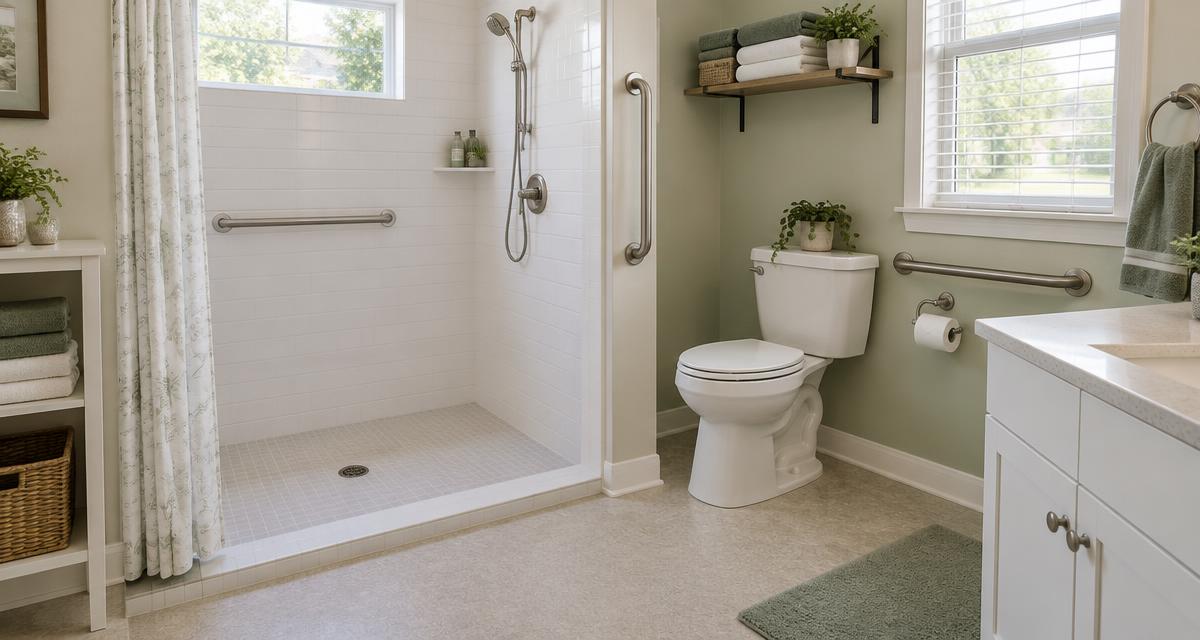
A bathroom can look tidy and still be awkward to use. The door may catch on a mat. The light switch may be out of reach. A shampoo bottle may sit where you have to stretch for it. Bathroom safety for seniors starts with noticing these everyday details, not with buying a pile of products.
If this is your home, begin with what you find difficult. If you are helping a parent, ask them to talk you through their usual routine. You do not need to have them demonstrate a difficult movement. The aim is to understand the room and make a clear list together.
This guide is for Houston households, including families thinking about homes in Katy, Sugar Land, Cypress, Pearland, Kingwood, Humble and Friendswood. Layouts vary, so check the actual room. Handled's work is non-medical. Ask the care team about balance, transfers, bathing help and equipment. No room checklist can promise that a fall will not happen.
1. Start at the Entry and Threshold
Begin outside the bathroom. Look at the doorway in daylight and with the lights you normally use at night. A raised strip between rooms, a curled rug edge or a door that opens into a narrow path can make the entrance harder to manage.
- Check for a raised or uneven threshold.
- Move loose items away from the doorway.
- Check whether the door swings over a mat or blocks the route.
- Notice changes between carpet, tile and other floor surfaces.
Do not remove a threshold or change a doorway without understanding the floor and door setup. Mark the concern for a qualified professional. If mobility equipment is used, ask the care team what clearance and access the person needs rather than guessing.
2. Clear the Path to the Toilet
Look from the doorway toward the toilet. A wastebasket, scale, laundry basket or spare stool may take up the very space someone needs to turn. Move nonessential items out of this route, with the homeowner's agreement. Keep toilet paper and other basics where they can be reached without leaning across the room.
Check whether the toilet area has useful lighting and room beside it. Do not ask someone to practice sitting or standing if that movement is difficult. Toilet height, transfer methods and recommended supports are individual questions. An occupational therapist or other appropriate clinician can advise on those needs.
3. Review Tub or Shower Entry
A tub edge or shower lip may require a step that feels different than it used to. Look at the entry itself, the space outside it and where water collects. Note whether a shower door narrows the opening or whether a curtain trails into the walking area.
Do not improvise a step, stack loose mats or turn a household chair into bathing equipment. Ask the care or therapy team whether a shower seat, transfer bench or other support is appropriate. Follow the equipment provider's setup instructions. A qualified home-modification professional can review physical changes to the room.
You do not have to decide on a remodel during this first check. Write down what is hard to use and separate simple housekeeping changes from work that needs professional advice. That keeps the next step manageable.
4. Check Grab Bars and Their Support
Grab bars can provide a place to hold where appropriate. Their location should follow the person's routine and any guidance from their therapy team. A bar near the toilet serves a different movement than one at the shower entry. There is no single placement that is right for all bathrooms.
Installation matters as much as the bar itself. A qualified installer should confirm proper structural support, such as studs or blocking, or use a mounting system specifically rated for the wall construction and intended load. Screws through tile alone do not establish adequate support. Follow the bar and mounting-system instructions.
Do not use a towel bar, soap dish or shower door handle as a body-weight support. Do not assume a suction bar can replace a properly supported grab bar. If an existing bar moves or its attachment is unclear, stop relying on it and have it checked. Handled's Home Safety Installations can address agreed home safety changes, including grab bars where appropriate.
5. Look at Lighting During the Day and at Night
Daylight through a bathroom window does not show you how the room works after dark. Check the route from the bed to the bathroom, the doorway, the toilet area and the shower entrance. Look for shadows that hide floor edges and glare that makes surfaces harder to see.
- Keep a working light within convenient reach from the bed.
- Consider suitable night lighting along the bedroom-to-bathroom route.
- Keep cords out of walking paths and water areas.
- Check that an automatic light comes on before the dark part of the route.
Use lighting intended for the location and follow its instructions. Electrical work in a bathroom needs a qualified professional. New trouble seeing or navigating familiar spaces belongs in a conversation with the healthcare team, not just a brighter-bulb purchase.
6. Review Floor Surfaces and Mats
Water, loose fabric and smooth floors deserve attention together. Dry spills promptly. Check whether mats slide, bunch up or curl at the corners. A mat placed to catch water should not become another raised edge in the route to the toilet.
Choose slip-resistant products meant for the surface and follow their care instructions. Check them regularly because backing and adhesive can wear. Nonslip strips or suitable shower surfaces may help address wet areas, but a product is not a guarantee. Ask for advice if the flooring stays slick or the transition between surfaces is uneven.
7. Bring Everyday Items Within Reach
Put the items you use most where you can reach them without climbing, bending deeply or stretching across the tub. That might mean moving towels from a high shelf or keeping soap closer to the shower entry. Leave the walking route and useful counter space clear.
Ask before reorganizing someone else's bathroom. Familiar locations matter. Make a few changes together and explain where things went. Keep medicines according to the label and the pharmacist's instructions; home storage changes do not replace medication advice. Save less-used items for storage outside the main working area.
Turn the Checklist Into a Practical Plan
Make three short lists: changes you can make today, questions for the care team and work for a qualified installer. Clearing a basket is different from mounting a grab bar. Give each task an owner so the list does not become another thing sitting on the kitchen table.
Handled's Home Readiness Assessment reviews the non-medical home environment and provides a written plan with priorities. Home Safety Installations can address approved changes. If the home is outside Houston, share the address on the initial call so the team can confirm availability rather than assume service is possible.
Frequently Asked Questions
What should I check first in a senior's bathroom?
Start with the route from the bedroom through the bathroom doorway to the toilet. Look for a raised threshold, loose mats, cords, clutter and poor lighting. Then review tub or shower entry, support bars and access to everyday items.
Can a towel bar replace a grab bar?
No. A towel bar is not intended to support a person's weight. A grab bar needs an appropriate location and secure installation into proper wall support or a mounting system rated for the wall and intended load. Ask a qualified installer to check the support.
Should I remove all bathroom mats?
Remove mats that slide, bunch up or have curled edges in a walking route. Wet areas still need appropriate slip-resistant surfaces. Choose products intended for that surface, follow their instructions and check that they do not create a new trip hazard.
Does Handled provide medical bathroom assessments?
No. Handled provides non-medical home safety reviews and Home Safety Installations. Questions about balance, transfers, bathing assistance or medical equipment belong with the person's healthcare or therapy team.
Further Reading
Talk Through Your Home's Next Step
You do not need a finished renovation plan to ask for help. Book a free home safety call with Handled Home Solutions to talk through the bathroom, the home address and the next practical step. Bring your questions; medical decisions stay with your care team.
Book a free home safety callFree Resource
Get the Discharge-Day Home Checklist
A room-by-room, non-medical checklist for the days before your parent comes home. We'll email it to you and you can download it right away.
Handled is a non-medical service. Follow your care team's instructions for anything clinical.
